the bottle: Vina Zorzal Graciano 2007 Navarra the movie: Chariots of Fire, 1981 the meal: Oven-roasted winter root veggies with Spanish chorizo, shallots and braising greens. I have been meaning to get an Olympics post in here, but last week was challenging due to travel. And the week before, we opted for a Valentine’s post, bypassing other great opportunities in the Chinese New Year(2/14), Presidents' Day(2/15), Mardi Gras(2/16) and Ash Wednesday(2/17), all of which would have made for excellent food-related post opportunities. (All except…er, Ash Wednesday, that is.) Envisioning jiaozi dumplings and sake with Eat Drink Man Woman. Or Crawfish Etoufee, King Cake and Hurricanes with A Streetcar Named Desire. Laissez les bon temps rouler!)
But because the Winter Olympics happen only once every 4 years, we feel it deserves a place in the journal of bottle movie meal. And since we’re closing in on the closing ceremonies, it’s now or never. Sunday will be the official closing ceremonies of the 2010 Winter Games so our menu-movie planning should “dovetail” well with the extinguishing of the flame and a wind-burned, achy-good retrospective. (Sunday also happens to be Purim, so if you want to modify a bit by adding some pastries like hamantash, then please indulge. And it’s even appropriate, considering the movie selection.)
Instead of featuring a more classic and well-loved Winter Olympic-themed movie like Miracle, or a wackier one like Cool Runnings or Blades of Glory, I felt a hankering to pull out an old Summer Olympic-themed favorite that captures what I feel is the essence of the Games in an evocative and timeless way. Chariots of Fire is the wonderful story of two very driven British athletes preparing to compete in the 1924 Summer Olympics, each for different and intense personal reasons. But underlying each athlete’s reason is a shared sense of morality with strong religious underpinnings. Harold Abrahams (Ben Cross), a young and proud Cambridge Brit, who is also Jewish in pre-war Europe, uses his gift of speed and athleticism to overcome anti-Semitism from those who would question his true Britishness, including the Cambridge institutional elite themselves. Abrahams runs against both the dusty, decaying British Empire, and Eric "The Flying Scotsman" Liddell (Ian Charleson), who is driven equally hard and passionately, but by a devotion to his Christian convictions and the calling of God. Eric sees his gift of speed as a calling, and channels that calling so devotedly that he determines he cannot run in his preliminary heat at the Games that are held on the Sabbath.
What an incredible screenplay this is. The interplay between the religious overtones in the drive of the two different characters is fantastic, but not at all overplayed. There is an unsubtle parallel between each man’s refusal to sacrifice his ideals in spite of the odds or easy way out, but it works because of great acting, underplayed dialogue, beautiful art direction, and of course, the now famous score from Vangelis that lifts the picture to the podium in our hearts.
In today’s world where fame and the culture of the individual drives so much in our media crazed world, it is refreshing to see a look back in time to when more powerful and culturally significant themes played into our sports narratives. And for the fashionistas out there, this movie is notable for its famous beach running scenes which, accompanied by the Vangelis soundtrack, inspired legions of art directors and photographers from Ralph Lauren to Calvin Klein. And not to forget, on the medals front, Chariots of Fire won four Oscars, including Best Picture.
Less Olympic in scope, our menu-planning instead relies on simplicity and the athlete’s best friend: pasta. There’s nothing like a hearty and savory bowl of pasta, brimming with fresh root veggies and crisp braising greens, then sprinkled with a tangy romano or parmesan reggiano. This is a lighter form of wintertime comfort food for me and provides not only the sensory and gustatory fuel for the common cold weather, but the caloric punch necessary to get off the couch and put in a few miles of my own. This recipe is in the kitchen-sink freestyle category, relying on a smorgasborg of bright winter veggies, with emphasis on the root variety, onion or shallot, and some good Spanish chorizo. It’s an oven-roasted medley of dense, sweet earth sugars, and toothy whole wheat pasta, all tossed together in a light fruity olive oil for melding. It’s done in about an hour, so you can prepare it during the curling events and be sitting back down in front of the tube in time for the hockey finals. Our gold-medal winning wine this week is this high-performing Graciano from the far south of Navarra in northern Spain which seemed appropriate for the dish. (It won a gold medal in the International Wine Challenge.) The desire was to have a lighter but full-bodied glass with the pasta dish, and the Viña Zorzal Graciano 2007 Navarra fits the bill perfectly. This is a ripe, well-structured and heady pour with a spicy scent that is just a little tart and fruity to counter the spiciness of the sausage. According to my email friends at Garagiste who brought this wine to my attention, it has a “full and deep red fruit character but the desirable yin-yang of low alcohol (much like a Loire red or an old-school Cotes du Rhone vinified in cement).” As a wine of such character, it’s a great match for those of Harold and Eric, and at under $10 it makes the medal easily within reach.
Recipe for pasta Chop into 1/2-3/4" pieces root veggies like: sweet potatoes, Jerusalem artichokes, beets, carrots, turnips, and rutabegas with an onion, cut into eighths, or even better, three or four quartered shallots. (1 each of the larger ones, and 2 to 3 each of the smaller) Chop a cup of Spanish chorizo into half inch pieces. Toss with olive oil in a big bowl. Grind sea salt and pepper into the veggie mixture. Spread out into one layer of a sheet pan so that the veggies are not crowded. Then place into preheated 400 degree oven. Every fifteen minutes pull out the veggies and turn over to brown equally. After half an hour add another sheet pan of large torn pieces of braising greens, also tossed in olive oil, salt and pepper. After 45 minutes for the root veggies and 15 for the greens, pull out everything and toss with whole wheat pasta. I use Whole Foods 365 brand Penne because it has great tooth and tastes great. Grate fresh Romano or Parmesan Reggiano over the pasta and serve.
I hope you have been enjoying the Olympics this past week. Unfortunately, we are traveling and unable to make a post this week. Next week, we'll get in our celebratory medals platform posting to honor the Games.
the bottle: Hightower Cellars Murray Cuvée Red 2007 the movie: Say Anything, 1989 the meal: Pan-seared duck breast with bittersweet blood orange sauce, pan-fried Brussels Sprouts halves with bacon, red jasmine rice with toasted hazelnuts and parsley, chocolate pot decrème I chose to forego the fervent draw of the Olympic spirit this week and submit to the powerful youthful allure of true love that Valentine’s Day proffers. And while I’m one who looks slightly askance at the Hallmarkization of Valentine’s Day, the true essence of the day is most definitely worth a bulging red tribute. And so next week, let us roll out the white ribbons and spikes, don our colors and parkas, and follow the flame to glory.
St. Valentine’s Day is named after the Christian martyr, Valentine, and was established by Pope Gelasius I in 486 AD to celebrate love between two people. In the tradition, lovers express their affection for one another by presenting flowers, confections, and hand-written notes. In Say Anything, Lloyd Dobler uses a boombox.
In one of the sweetest, most innocent moments in modern film, our hero, played by a young and eternally optimistic John Cusack, appears in the driveway of the girl who has reluctantly rebuffed him, and with legs akimbo and arms unbending, rebelliously blasts the Peter Gabriel song, In Your Eyes, from his portable sound system, as if it were his loudspeaker of love.
This is an honest movie, and Lloyd plays a regular guy acting out a regular life with a regular kind of heart-pounding, unstoppable first true love. It’s the very regular-ness of it all that makes the love bug affliction so trenchant. And Lloyd’s persistence and honesty in the face of odds ultimately wins the day, and the girl. It’s not overbearing in the slightest, so don’t expect a John Hughesean, treaclish teen tale. Cameron Crowe—that's right, for the second week in a row—directs us an unconventional, conventional story about just simply pure love and its undeniable beauty.
In honor of Lloyd and his love Diane(Ione Skye), we present an elegant and assertive, yet simple and sweet, pan-seared and oven-finished duck breast with a bittersweet blood orange sauce. (Miles and mouths away from duck à l'orange!) The words alone can tickle the teeth and tingle the tongue. The duck breast is seared in a hot iron skillet for 7-8 minutes, flipped and put in the oven for another 7-8, and it's done. The bittersweet, blood orange sauce is exquisite and easier that it sounds. The effect of the tart and tangy, sweet and sour sauce dabbled over the moist pink, thickly sliced and crispy-brown-skinned duck breast is as glorious and perfectly-suited as ApoloOhno on the short rack.
To carry forth the theme of pretty in pink and perfectly dreamy, I marry the duck with a soft and ethereal red jasmine rice (I use an amazing product from Alter-Eco) studded with toasted crunchy hazelnuts, and flecked with parsley. Then, pan-fried Brussels Sprouts halves with salty bacon provide an earthen and toothy counterpoint. The final plate is a wondrous palette of colors and textures that soars alongside Lloyd’s raw, exposed heart. It’s all just delicious.
Of course we can't get away without chocolate tonight. No way around it. And these easy, luxurious little pots decrème are the perfect finish to this elegant meal. They are a dense and rich, pudding-y pleasure that melts in your mouth like a spoonful of liquid truffles. A dab of fresh whipped cream acts as the subtle crown to the ivory throne. Zest a little blood orange on top and grab a spoon.
Our goblet tonight will carry an irresistable red emblazoned with an even more irresistible label—that’s right, man’s second best friend. The Hightower Cellars Murray Cuvée Red 2007 is named after winemakers Tim and Kelly Hightower’s “best friend,” their yellow lab, Murray. The blend is 69% Cabernet Sauvignon and 31% Merlot, from Alder Ridge in Horse Heaven Hills, and Walla Walla Valley. This deep, purplish ruby red glass plays its fruity cherry, blueberry and cassis aromas well off of the succulent gamey duck and vibrant citrus flavors. The accents of light toasty oak and vanilla are a great baseline for the sweet, supple jasmine and hazelnuts. It is a beautiful and juicy valentine for your special evening, and even more special person. So raise a glass to Saint Valentine and Lloyd Dobler, for tonight they remind us of what it means to be in love.
Recipes can be found here:
Pan-seared duck breast with bittersweet blood orange sauce. For the duck breasts: http://bit.ly/aNw9Pd For the bittersweet blood orange sauce: http://bit.ly/dxvgtN Pan-fried Brussels Sprouts halves with bacon: Cook some bacon slivers until crisp in an iron skillet. Add halved Brussels with a tbsp of olive oil and a little butter. Cook over medium heat until browned. Add a little chicken stock for moisture if you like and cook until tender but still crunchy.
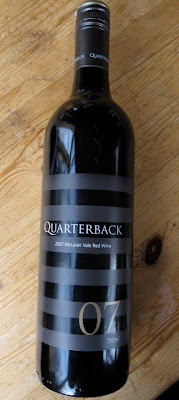
the bottle: 2007 De Lisio Quarterback McLaren Vale
the movie: Jerry Maguire
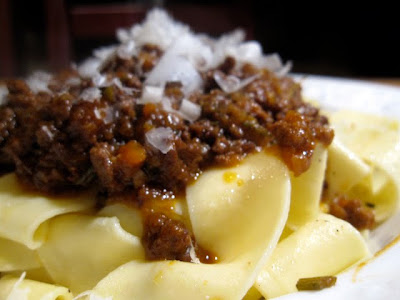
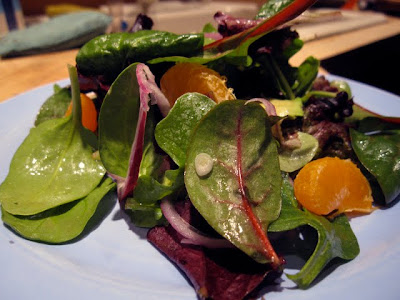
the meal: Lamb ragù over pappardelle, mixed greens with citrus dressing, avocado, red onion, parmesan and clementines, molasses chocolate chip cookies
At this same time every year, we gather around the flickering warmth of our television sets with friends and food to celebrate that classic American institution: the Super Bowl ad. We chortle, we chafe, we guffaw and we gape, and sometimes, just sometimes, we even tune out. Or watch the game.
So let us stay in the deep rich red veins of last week’s themes of money and meat, but swap the shady shenanigans of politics for the prime purity of sports. And come to think of it, what could be a better fit? We chose Jerry McGuire for this special occasion because of the utter humor that director Cameron Crowe, and actors Tom Cruise and Cuba Gooding bring to the screen in the name of authenticity in sports. Sure, we all know that the game is gamed and that even our heroes are heretical, but we still hold on to some quiet voice somewhere deep inside of us that believes in our better selves, and this movie serves it up in edible style. It’s neither rammed down our throats, nor spun into syrupy heights, but rather, becomes a masterly manipulation through Cruise’s sheer charm and conviction. (He won an Oscar.) The point of this movie is not to slam on money in sports but to remind us that nothing is worth doing if we aren’t true to ourselves in the process. This might sound glib, but Crowe uses humor and great actors to deliver the message with class. Cruise’s transformation is real and his effect on Rod Tidwell (Cuba Gooding, Jr., in another Oscar-winning performance) is believable. At its most basic level, the movie is about money and sports, but at its core is a story of hope, redemption, love, and discovering the meaning of life. Crowe uses dialogue extremely effectively in developing the characters, but the one-liners in Jerry McGuire steal the show. In a favorite, Jerry makes a feverish and desperate sales pitch to Tidwell, his last remaining client, “I will not rest until I have you holding a Coke, wearing your own shoe, playing a Sega game featuring you, while singing your own song in a new commercial, starring you, broadcast during the Super Bowl, in a game that you are winning, and I will not sleep until that happens. I'll give you fifteen minutes to call me back."
You might have noticed by now that we’re never going to play it too safe or straight here, so we’ll skip the chip-and-dip-with-steaming-pot-of-chili crudité classic but still tip the helmet by riffing on the iconic chili centerpiece. Part of the tradition that we love is the day-long, stove-top simmer with its slow bubble and pop, filling the house with savory, earthy aromas, so we chose a lamb ragù to play the hero substitute. If you haven’t ever belabored a long, slow simmered ragù, this weekend is the time to start. Don’t worry, the belaboring part takes the form of an occasional stir with a wooden spoon, and three hours later, presto!, you feel like a true Italian nonna.
The key play in a ragù, which is basically a thick sauce of minced vegetables, tomato paste, meat and wine, is the browning part at the start. So get down with the brown. Don’t be afraid to let the minced veggies cook into a browned mush before adding the ground lamb. Then, let this brown down even more. Add the tomato paste and wine and cook it all down by half, add some water and then leave it for the rest of the afternoon. It will get more and more intense as the day wears on, and the alchemy of the brown will lift you into the outer limits of flavor. You’ll discover an intense depth with unctuous layers of earth, dark tomato and lamb, fused together in each bite. Serve it whenever you get hungry amid your sports day line-up, be it Jerry and Rod, or New Orleans and Indianapolis. I serve it on top of a local, fresh and fat egg-y pappardelle from Cucina Fresca in Seattle. Just pour a hefty serving of the melded, meaty ragù over the fresh steaming noodles, sprinkle on some shaved parmesan and freshly chopped parsley for a bit of salty green counter, then drizzle some deep strong olive oil on top to add a finishing touch.
A zesty salad of mixed greens or arugula, tossed in a light citrus-y dressing, with creamy avocado, thinly sliced red onion, clementine sections and more shaved parmesan makes for the perfect match to the bold rich pasta sauce. It’s a great finisher, like Rod Tidwell with the winning catch, to cap a winning meal.
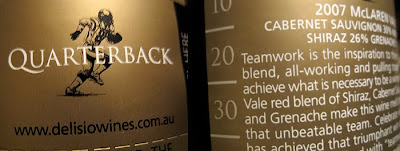
The wine was easy. We drafted the 2007 Quarterback from McLaren Vale. It’s a delicious Aussie red named for the 4 varieties of grape blended in approximately equal proportions. This is blending done well, which is no small feat. The soft Grenache and Merlot do an excellent job at balancing the more tannic Shiraz and Cabernet Sauvignon and form a strong alliance of rich balanced flavors. This compact and sturdy balanced fruit bombette is a slam dunk with the lamb ragu, and at $15, it a great deal. If you can order more than a bottle, it will age quite nicely—or at least until next year’s big game.
Another reason I felt this wine was so good for this week’s theme is the out-front bold marketing job the label does to promote it. The label itself cues the yard markers of the football field, and the sales materials—hats, jerseys, etc.—all play into the essence of the gridiron. I even saw a branded pigskin sitting atop the case display at point-of-sale in the wine shop. Go McLaren! Go Vale! Swirl in the Mouth and You’ll Prevail!
For dessert, one or two of the best-all-time chocolate chip cookies is all you need. Pull these out of the oven, and the crowd goes beserk! Sara’s special trick is to add some molasses—a tablespoon or two—use less flour, by about a quarter cup, and use really good chocolate. It makes a crispy, chewy cookie with lots of hot molten chocolate in every bite. Mmmm. Another glass of cold milk, please, sir. So get your game on, in whatever form it takes. And enjoy this funny, delicious, heart and soul warming evening with your most sports obsessed, or not, friends.
the bottle: 2007 Palin Cabernet the movie: Mr. Smith Goes to Washington
the meal: Best Beef Stew, Supernatural Brownies with orange zest whip
Last week, just when we were getting into a rebuilding frame of mind, a Supreme Court ruling that essentially gives corporations the right to unlimited political spending, seemed to tear down the campaign financing regulatory structure we have made so much effort to build. This ruling will empower corporations to use their financial clout to directly influence elections of favorite politicians and judges. The headline in the New York Times read scarily, “Lobbies' New Power: Cross Us, and Our Cash Will Bury You."
The righteous argument is that corporations should be entitled to the same rights as individuals, and thus, protected under the first amendment. This decision effectively dissolves limits on the spending of corporations and unions for campaign ads. Therefore, no amount of cash is too great to spend on an agenda—any agenda you can think of. For example, say the National Salt Reduction Committee and Michael Bloomberg got together and decided they wanted to ban salt. Now they could actually make a good go at it. Oh, they’re already trying to do that, you say? Well, just imagine how much more effective they could be with unlimited Bloomberg ad spending on the case. He’d have to put his money where his mouth is, figuratively speaking, but I can almost see the ad campaign now…a time-lapse commercial where Michael Bloomberg’s appearance shows graduating hair color away from white to black as he reduces his salt consumption and becomes healthier and ever-younger appearing. (Once those ad gates are opened, I’m sure there would be no shortage of creativity to serve the cause of the first amendment.)
My final determination this week on just the right movie to tie into this groundbreaking ruling I suppose bespeaks the ultimate long-term gestalt of this blog. In floundering between the provocative The Corporation, which takes the cynical view of the corporation as human to extreme by comparing it to a mental patient, and the rollercoaster All the Kings Men, based on the great novel by Robert Penn Warren about the rise and fall of a corrupt populist politician who uses his power to make his friends richer, I chose the somewhat more optimistic Mr. Smith Goes To Washington. Because my mind takes this ruling to a such a potentially devastating place, I have to rely on my default judgment that character and integrity will ultimately prevail in politics. (Yeah, yeah, I know.) While Jimmie Stewart’s Mr. Smith might represent a kind of courage that seems sorely lacking in politics today, I trust we will find our way again, with common sense, honesty, and empathy. But I'll take a bill, too.
In the 1939, eleven-academy-award-nominated Mr. Smith, Jimmie Stewart plays a naïve and principled small town scout leader who is recruited to become the next state senator. He comes face to face with Washington’s worst form of political corruption, but refuses to back down. Quotes a reader, “Where have you gone Jimmy Stewart? We miss your innocence and your tenacity. This movie was made in 1939 but I watched it like it just came out in the theater. I cried and I laughed and in the end I felt a little better about our country and democracy. God help us, we need movies like this.” I’d have to agree. Inspired first by the hot-blooded possibilities of All the King’s Men, and then the quandaries of Mr. Smith in Washington, I settled for a red-meat based political stew for dinner. Plain and simple, savory and deep, it’s the perfect winter one-dish to curl up on the couch with. You can prep this pot, push it into the oven for a few hours, and then you’re ready to kick back with some good crusty bread, cold butter, and a big glass of red wine. The secret to this recipe is the intense anchovy-garlic-tomato paste that slowly infuses the stew, blending and coalescing like a good bipartisan bill. Don’t worry, the anchovies may seem odd, but they serve to melt into another rich layer of depth and dimension with the wine and salt pork(I used bacon). I skip the gelatin because my sauce was thick and rich enough from the reduction prior to placing in the oven. One could add a little molasses for a sweetness or even some chipotle chilis for zest.
Our dessert this week is easy and indulgent. Plus, you get the additional benefit of a musty, chocolate-y brownie smell wafting through the house. These brownies from Nick Malgieri’s Chocolate are more fudge-y than cake-y, which is the way you want it to go, in my opinion. But there is just enough cake and crustiness to counter the fudge. All it needed was a dollop of whipped cream and some orange zest to crown the brown. The meal this week is super easy at every step, fortunately, because we just ran out of time. It’s too bad politics doesn’t work that way.
As a delicious counterpoint to both our hearty and comfort-inducing political stew, as well as Obama’s State of the Union this week, what could be a better match than the Palin 2007 Chilean Cab? Perky and still very young, but with nice structure, this cabernet from the Valle Central region in the heart of Chile is a great food wine, and an even better value. (I found it for $12 at Esquin.) Aged for 6 months in barriques, this wine has some nice full red fruit and balanced tannin levels, which can easily stand up to the deep flavors of the stew. What I also love about Palin is her uncompromising values. Made by Chile's foremost organic/biodynamic expert, Alvaro Espinoza, from organic grapes, this is truly a wine that is made in harmony with its environment. So drink up and swill baby, swill. Oh, and if you were curious about the name, it describes a ball that was used in an ancient game played by the Mapuche, a group of people indigenous to central Chile.:-)
the (local) meal: Pan seared and roasted pork chop with cranberries, red swiss chard, and caramelized, spiced carrots, vanilla bean ice cream with fresh frozen berries
There is a powerful rebuilding theme permeating the air, whether it relates to the economy, Haiti, health care, or the Massachusetts political system, so this week let us chew on the idea of restoration and reconstruction.
Our movie selection is the quaint and charming Wall-E because it effectively seeds a hopeful message in spite of what seems at times like insurmountable odds. How to rebuild the broken economic system of a first world nation? How to rebuild the entire infrastructure of a developing nation? These are tremendous challenges, but with faith in our best qualities we know we can build something better next time. (This time.)
In Wall-E, a cute, rusty, old-school robot falls in love with a mission-driven, high-tech bot amidst a post-apocalyptic wasteland that was earth 700 years ago. If for no other reason, watch this flick for the lovable chirps, warbles and peeps that anthropomorbot this entirely original film character. He is there to clean up the mess we left behind, and she is there to unearth clues to its demise. Deeper within the obvious but heartening theme of human triumph over technology is the subterranean connective tissue that makes us work—we are essentially a feeling, loving and caring organism, and this is what will save us from ourselves. No matter how downtrodden, worn-out or broken a system may be, rebuilding it with humanity and responsibility will surely lift us to new heights.
One area that could use a little (!) rebuilding is our food system. It’s hard to argue that industrialization of our food and economies of scale have made us better human beings. In fact, haven’t we lost some of our soul? (And soul food.)
Buying foods from your local area is one way to start pushing this massive meatball up the mountain of spaghetti before us. So this week, in service to the movement to “buy local,” I’ve made a meal that taps into our “foodshed” here in the Pacific Northwest. Heck, if we can succeed in this assignment in the dark depths of winter, who knows how far we might go? (Can anyone say localized integrated micro ag systems?)
To help you through the meal planning and execution this week (and beyond), I need to introduce you to a new friend: the Seasonal Ingredient Map at epicurious.com. This easy-to-use interactive map helps you see what's fresh in your area at any given time of the year, find ingredient descriptions, shopping guides, tips—and best of all, really simple, delicious recipes. (No, I’m not on epicurious’ payroll.)
Because your food options will vary depending on your geographical locale, you will have to improvise on this week’s meal. Try and find the ingredients we use here, but by all means, ad-lib away. It’s the spirit of the recipe in our kitchen, not the letter.
We designed our meal around some Berkshire pork chops that we had in the freezer, left over from our last quarter-pig purchase from Shelley and Mike Verdi of Whistling Train Farm here in Auburn, just outside Seattle. If you don’t know where to get local pork, or other meats, try asking at the nearest natural or health food store. If that fails, or there isn’t one, try the local farm bureau, chamber of commerce, or just try asking around town. If all else fails, google it.
I pan-sear and then pan-roast these tender, thick-cut chops in my cast iron skillet, and then escort them with a runny, molten cranberry-brown-sugar glaze. And the perfect seasonal partner to these moist chops is a mineral-y, delicate, red swiss chard from Full Circle Farm here in Carnation, WA., very simply prepared in shallots and butter. And to extend the sweet tang of the porky, cranberry-brown-sugar flavors, I amplify it all with caramelized, spiced sweet carrots, using glorious reddish orange tubers from Jeff Miller at Willie Green's in Monroe, Wa. The flavor contrasts and complements abound here, but shouting out is the alliance of moist and salty, with sweet and tart. The lean, buttery, earthy chard, and the sweet, crunchy, spicy carrots are perfectly suited to stand up to the robust flavors of the chops. A true finger-mopping dish with stout flavors to perk you up and make you happy in the low leaning light of January.
For dessert, we’re going to keep it simple tonight. To round out the locavore lip lust, how about vanilla bean ice cream with melting blueberries, boysenberries and raspberries? The fruit is from Remlinger Farms and is picked locally and frozen, so we use it all year. Hopefully, you can find someone in your area doing this, because it’s a treat to have fresh, local berries in winter, even if they are frozen. The ice cream, too, is our wonderful local producer named Snoqualmie. They do fantastic, creamy, rich ice creams, and they do it with delicious conscience: Snoqualmie was the first business to receive official approval from the Snohomish County Sustainable Development Task Force for their environmentally-friendly operation. So it goes down really smoothly.
Staying on the local tack, our wine is a 2006 Haystack Needle Sangiovese, made in Woodinville near Seattle with grapes grown in the Columbia Valley. (The “sangee” grape is a classic Italian grape that is used in Italy to make Chianti and other Italian wines.) This could not be a better match. We needed: a) local wine, b) a lighter wine that would not overshadow the pork, and c) a wine that complemented the big flavors in the sauce. And we got all three. This round and supple wine not only captures some strawberry, rhubarb and raspberry aromas, but best of all, carries a distinctive dried cranberry base flavor—the perfect co-worker to the pork. Add in some balancing elements like earth, stone and leather, and you have an outstanding local pour. Obviously, this wine pairing presents a challenge to those of you who aren’t fortunate enough to live near a grape growing region, so I would suggest nosing around to see if wines are made in your region, and if so, try one. If not, try this one. It’s another incredible find under $10! And if you can’t find it, any decent pinot will do the trick.
This week, as we reflect in our tidings of heartbreak and loss from Haiti, I would encourage you to seek the solace and comfort of friends and family, share in a healthy meal and conversation around the truly important things in our lives, and to quote Max Ehrman’s well-loved 1920 poem, “…be at peace with God, whatever you conceive him to be, and whatever your labors and aspirations in the noisy confusion of life, keep peace in your soul. With all its sham drudgery and broken dreams; it is still a beautiful world. Be cheerful. Strive to be happy.”
And if you are so inclined, an incredibly powerful, effective, and highly-respected organization to send help to the Haitian crisis is Dr. Paul Farmer’s Partners in Health: http://www.standwithhaiti.org/haiti
Recipes can be found here:
Pan seared and roasted pork chop with cranberries, red swiss chard: http://bit.ly/8k8QSI
the bottle: Boekenhoutskloof 'The Wolftrap' Red Western Cape 2008 (South Africa) the movie: To Kill a Mockingbird, 1962 the meal: Edna Lewis roast chicken with herbs, Bill Neal spoon bread with grits, chiffonade of collards, lemon cake pudding
Sara and I did finally drag the tree out of the house this weekend, and we miss it already. The cats miss it, too. Although, we don’t miss the cats missing the tree. And that corner of the living room has now been reclaimed and we can return the armchair and floor lamp to their rightful places. We are officially ready for a grounded take-off into two thousand and ten.
Because Monday, January 18th, is Martin Luther King Jr. Day, I want to pay homage to the man and the meaning. I’ll get to the food in a moment, but in the spirit of Dr. King, perhaps we can all create a miniature form of his “Beloved Community” in each of our own households. This can include any and all in-laws, friends, grandkids and grandparents, partners, pets, and any hungry neighbors you can coax in from the cold. And if you’re just cooking for one, then make yourself feel like 10,000! (Multiply recipe by x2500 in your head.)
And thus, the meal for this special occasion is inspired by the great food culture of the south, from two renowned chefs who blazed trails—and broke barriers—to lift southern food out of the south. And since this blogger spent a good portion of his formative years between Chapel Hill and Durham, NC, there is particular affinity here for their legacies, even if they don’t come with a basketball.
Edna Lewis was born the granddaughter of an emancipated slave in Freetown, Virginia, and went on to become the grande dame of “Southern cuisine” cooking. Often called “the South’s answer to Julia Child,” she established her reputation at Café Nicholson in New York City in 1949. Catapulting from seamstress to celebrated chef by bringing primal comfort food to the continental-cuisine-inured smart set forty years ahead of her time, she created culinary magic in a tiny Belle Epoque brownstone space, and Café Nicholson became a landmark haunt among high society and high bohemia — frequented by the likes of William Faulkner, Marlon Brando, Tennessee Williams, Truman Capote, Gloria Vanderbilt and Marlene Dietrich. So her food is good. And it touched a nerve.
One dish they all came for was this perfectly gorgeous and finger-drippingly succulent roast chicken with rustic herbs. Edna made it really simple, using a lavish butter-herb rub, and semi-blasting it at 425° until caramelized-crisp. They gobbled it up. And you’ll gobble it up, too. Note: she recommended brining, as do I, but this requires a bit more planning. (Put the bird in brine the day before.)
Bill Neal was another creative thinker who helped establish respect for southern regional cooking in the 80’s, most impressively with Crooks Corner in Chapel Hill. His iconic shrimp and grits at that restaurant paved the way for the likes of Ben and Karen Barker, and even, dare I say, Bobby Flay.
For our meal, I see his spoon bread with grits as the perfect counterpoint to Edna’s savory, moist chicken. This creamy, fluffy, and tender-crunchy spoon bread manages to feel both unctuously rich and ethereally light all at once, thanks to a few whipped egg whites gently folded in.
To say that these two dishes and their creators are symbiotic goes beyond the tastes to the times—Edna was an African-American woman in the coming of age of civil rights, and Bill Neal was a gay white man in the late 70’s and 80’s when AIDS — which took his life at 41 — was just beginning to impact the world. Each created a powerful mark in spite of, and perhaps because of, their marginalization.
I realize we went the sautéed greens route last week, but there really is no better third party for this party than collards. It’s too bad that collards get a bad rap, because they can become wondrous in the right hands—and tonight, those will be yours. But we’re going to do them quite differently. Instead of the classic long slow simmer in liquid, which often results in a murky mush, we chiffonade them into long thin strips and practically stir-fry them so that they have a crunchy, light texture. And they take about a quarter of the time. This sweet and salty, pillowy haystack of toothsome greens is a whole foods treat and a nutritional powerhouse, packed with fiber, carotenes, chlorophyll, manganese, vitamins B1, B2, B6, C, E, and several minerals, including iron, copper, and calcium. Whew! All of this goodness in such a tasty dish. (As far as I’m concerned, this can be a weeknight dinner all by itself.)
Rounding out our meal is a simple and honest lemon cake pudding, which is exactly what it sounds like—a cake-pudding hybrid that is miraculously light in its pudding-ness. The lemon zest keeps this uncomplicated dessert in the angles and edges, and it’s easy on the mouth, too. Rapturously moist and bright, crisp and yielding, this southern-style classic will linger with you and leave you craving more.
This week’s movie is none too simple, but powerfully honest. It is the story of perhaps our best selves, in the light of our worst selves, the story of innocence and faith in the battle over fear and violence—and barely winning. It’s a story that we all still struggle with today, and in light of Monday’s memorial day of service for Martin Luther King, Jr., it is a fitting tale.
In a small Depression-era Alabama town, lawyer Atticus Finch, played big-heartedly by Gregory Peck, takes on the case of an innocent black man accused of assaulting a white girl. He’s up against the entrenched racial power structure of the Old South, and riding on it is not just his pride, but also the future for his children and country.
In To Kill a Mockingbird, children are the lenses through which we see ourselves, and that makes this movie quite touching. Specifically, the story—based on Harper Lee’s 1961 Pulitzer Prize-winning book that we all know from high school—is told from the point of view of Atticus Finch’s 6-year old daughter, Scout. Together with her brother Jem and friend Dill, they go about their curious and rambunctious lives, growing up as spirited children in what almost feels like a more innocent time.
A mysterious and alluring thread in the story is the character of Boo Radley, their reclusive man-child neighbor, who they fear throughout the movie until the end when he shows his true self—as a gentle and sensitive hero. And as an albino-like white man, Lee cleverly presents us with dimensions of our moral character using an ironic device in skin color—the children fear Boo Radley, an albino, because they don’t understand or empathize with him, until the end when he proves himself and their ignorance is exposed; and the “adults” fear the black man (in Tom Robinson) because he too is something and someone they don’t understand, and therefore have no empathy for. Sadly, the vilified Tom Robinson finds no salvation, and our sense of self is left morally off balance. It was a powerful theme for me and, while perhaps a bit obvious, struck me quite viscerally.
Beautifully, the angst in the movie all happens within the greater context of a child’s world of wonder, innocence, and beauty—a world almost utopian in its glorified send-up, and captured gorgeously in the opening credits with a languorous pan across objects of heightened wonder from a child’s secret box of treasures. See it for this sequence alone, and the score, from Elmer Bernstein, which is hauntingly beautiful. The movie will leave you a changed person, even in some small way. And methinks a better one.
What to sip while this incredible story unfolds? In presenting the right wine for the meal and the message, I found a wine from a progressive South Africa vintner to be a good match in more ways than one. A free(er) South Africa is making very good wines that are somewhat affordable—ours was $9—and vintners like Boekenhoutskloof (try saying that three times very quickly after one glass) are taking important steps towards more sustainable operations in production, with an emphasis on biodiversity and conservation.
Boekenhoutskloof is one of the oldest farms situated up the "Valley" in the Franschhoek foothills of the Western Cape. The name Wolftrap is a tribute to the pioneers who in the early days of the Cape, erected a wolf trap at Boekenhoutskloof, although no wolf either real or mystical has been seen in the valley in many years. For a quick translation from Afrikaner, Boekenhoutskloof, pronounced ‘book-n-howed-skloof,’ means ‘ravine of the indigenous Cape birch tree that was greatly prized for furniture making,’ or words to that effect.
This wine is a red blend, which includes Syrah, Mourvedre and Viognier, and has lots of seductive ripe black fruits, with some meaty, spicy, and wood smoke characteristics. I got some chocolate in the aroma and a touch of white pepper, which are beautiful matches for the maple and smoky essences in the collards. Once this bottle is gone, you might just decide to go back and get a case.
The meal part Edna Lewis’ roast chicken with herbs Serves 4 One 3.5-pound chicken, brined* 4 tablespoons (1/2 stick) unsalted butter, softened Salt Pepper 3/4 tsp thyme Small onion, peeled and quartered 1/2 cup water
*brining a bird Stir kosher salt into cold water until dissolved; 1/4 cup salt to 1 quart of water. (Don’t use table salt because it will be too salty.) Mix enough brine to cover the poultry completely in a (nonreactive) bowl or pot. Store refrigerated for 8 to 24 hours.
Preheat oven to 425°. Dry the bird, inside and out, with paper towels. Mix together the softened butter, salt, pepper, and thyme, and rub all over the chicken, and inside the cavity as well. Truss the chicken with twine, making sure you secure the wing tips and tie the legs so that the whole bird is in a tight, plump form. Roast in pan with onion and water for 40 minutes without opening the oven door. Then, remove the roasting pan and pour off the fat and juices from the bottom of the pan into a small bowl; reserve. Return the chicken to the oven for approximately 20 minutes longer or until the juices from the thigh run clear when pierced. Remove from oven, and transfer chicken and the onion to a warm platter. Tent with foil while you prepare the sauce. Skim off any visible fat from the bottom of the roasting pan, as well as from the roasting juices reserved in the bowl. Set the pan over high heat, and pour the juices in, scraping the bottom of the pan with a large spoon to dislodge any browned bits and caramelized juices. Boil hard for 2 or 3 minutes, until the juices have reduced slightly. You should have just a small amount of delicious sauce. Taste critically, and adjust the seasoning if needed. Carve and serve with some of the carmelized onion, spooning a little sauce over each serving. Mmmm. Tasting it all over again as I write. Bill Neal’s spoon bread with grits Serves 4 1 cup yellow cornmeal 1/4 cup uncooked grits 2 1/2 cups water 1/4 cup butter 1 cup half-and-half 1 teaspoon salt 3 eggs, separated (A foolproof and deliciously tactile method: pour the broken egg into your cupped fingers and let the white slip into a bowl below.) I take the liberty off adding about a cup of fresh or frozen organic corn to this recipe, and if you like, some minced jalapeño sans seeds.
In a medium saucepan over low heat, combine the cornmeal, grits, and water. Cook slowly, stirring frequently, until mixture is thick and smooth, about 30 minutes. Add corn if you are using it. Beat in the butter, half-and-half, and salt. Beat egg yolks then beat into the cornmeal mixture. Beat egg whites until soft peaks form; fold gently into the cornmeal mixture. Pour batter into a lightly buttered 8-inch square baking pan; bake in a preheated 375° oven for about 30 minutes, until lightly browned and irresistible. Quick-fried collards with maple and bacon Serves 4 1 large bunch collard greens, about 1 1/2 pounds 3 tablespoons olive oil 6 cloves garlic, minced 3 slices of thick smoky bacon, cut into small pieces 1 tbsp stock 1 tbsp cider vinegar (or any wine vinegar will do) Salt Fresh ground pepper 1 tbsp of grade B maple syrup A few dashes hot pepper sauce, optional
Cut off tough stems and center vein from collards, and then roll up and cut leaves into 1/4-inch strips. You should have about 6-8 packed cups. In a well-seasoned heavy skillet or wok, heat the olive oil over medium-high heat. Add the garlic and bacon and cook, stirring, until bacon is mostly cooked through. Add collards and cook, stirring constantly, for about 10 minutes, until the greens are tender. Add maple syrup and stir in. Cover and lower heat to medium low. Cook for a few more minutes, stopping before the greens lose their integrity. Season with the salt, pepper, and a few drops of hot pepper sauce, if desired. Smackin’ good! Lemon Cake Pudding Adapted from Georgia Kyser in Remembering Bill Neal 1 cup sugar 2 tbsp melted butter 3 eggs, separated (see technique above) 3 tbsp flour ¼ tsp salt 1 1/2 cups milk, scalded Grated zest and juice of 1 lemon Preheat oven to 350°. For this recipe, you’ll need a baking pan big enough to hold a 1 ½ qt shallow casserole or gratin dish. Mix together the sugar, flour, and salt. Beat egg yolks till thick. Add milk, lemon juice and zest, and melted butter. Lightly blend the dry ingredients and the egg yolk mixture until well mixed. Beat the egg whites until stiff peaks form. Fold the egg whites into the batter, ever so gently. Pour batter into the greased 1 1/2-qt shallow casserole or gratin dish. Then, place this casserole into the larger pan and fill with water half way up the side of the casserole. Place in the center of the oven and bake for 50 minutes, or until the top is golden brown and delicious-looking. Eat warm and with glee.
bottlemoviemeal is for everyone who likes wine, movies, and good, simple food. But especially people who like all three, together.
What could be a better way to spend a weekend night than to hunker down at home, either with family or friends, or happily solo, eat a delicious meal with a well-matched bottle of vino, and then settle in to watch a really good movie?
The idea for this blog is to create an harmonious and conceptual grouping of the three, to make for a fun, thematic evening at home.
Give it a try in the spirit of shared and real experiences — all the recipes are easy, forgiving, and soul-satisfying; all the movies are available from Netflix, and all the bottles are (mostly) easy to find and wont break the bank. I'll try and post on Wednesdays to allow for menu planning, bottle buying and movie ordering. Let us know what you think.
 I have been meaning to get an Olympics post in here, but last week was challenging due to travel. And the week before, we opted for a Valentine’s post, bypassing other great opportunities in the Chinese New Year(2/14), Presidents' Day(2/15), Mardi Gras(2/16) and Ash Wednesday(2/17), all of which would have made for excellent food-related post opportunities. (All except…er, Ash Wednesday, that is.) Envisioning jiaozi dumplings and sake with Eat Drink Man Woman. Or Crawfish Etoufee, King Cake and Hurricanes with A Streetcar Named Desire. Laissez les bon temps rouler!)
 Less Olympic in scope, our menu-planning instead relies on simplicity and the athlete’s best friend: pasta. There’s nothing like a hearty and savory bowl of pasta, brimming with fresh root veggies and crisp braising greens, then sprinkled with a tangy romano or parmesan reggiano. This is a lighter form of wintertime comfort food for me and provides not only the sensory and gustatory fuel for the common cold weather, but the caloric punch necessary to get off the couch and put in a few miles of my own. This recipe is in the kitchen-sink freestyle category, relying on a smorgasborg of bright winter veggies, with emphasis on the root variety, onion or shallot, and some good Spanish chorizo. It’s an oven-roasted medley of dense, sweet earth sugars, and toothy whole wheat pasta, all tossed together in a light fruity olive oil for melding. It’s done in about an hour, so you can prepare it during the curling events and be sitting back down in front of the tube in time for the hockey finals.
 Our gold-medal winning wine this week is this high-performing Graciano from the far south of Navarra in northern Spain which seemed appropriate for the dish. (It won a gold medal in the International Wine Challenge.) The desire was to have a lighter but full-bodied glass with the pasta dish, and the Viña Zorzal Graciano 2007 Navarra fits the bill perfectly. This is a ripe, well-structured and heady pour with a spicy scent that is just a little tart and fruity to counter the spiciness of the sausage. According to my email friends at Garagiste who brought this wine to my attention, it has a “full and deep red fruit character but the desirable yin-yang of low alcohol (much like a Loire red or an old-school Cotes du Rhone vinified in cement).” As a wine of such character, it’s a great match for those of Harold and Eric, and at under $10 it makes the medal easily within reach.